Why transcription isn’t the same as assistance
December 4, 2025

Transcription tools love to claim they’re “assistants.”
They record your meetings, spit out a wall of text, maybe bold a few highlights—and then stop. Everything else is still on you.
You still have to read it.
You still have to decide what matters.
You still have to write the follow-up.
You still have to update the CRM.
That isn’t assistance. It’s documentation.
Real assistance starts after the words are captured.
Transcription records what happened. Assistance moves things forward.
A transcript is a raw artifact. It’s useful—but passive.
Assistance is active. It takes what was said and turns it into outcomes:
- Clear summaries
- Action items
- Decisions
- Next steps
- Follow-up messages
If a tool hands you a transcript and calls it a day, it hasn’t saved you time. It’s just changed the format of your work.
A transcript still requires interpretation
Most meetings don’t fail because they weren’t recorded. They fail because no one translated the conversation into action.
Who owns the next step?
What was actually decided?
What needs to be sent—and to whom?
Transcription tools don’t answer those questions. They leave you to reconstruct intent from paragraphs of text.
Assistance understands intent and extracts what matters automatically.
Assistance understands context, not just conversation
Words without context are incomplete.
A real assistant knows:
- Who the meeting was with
- What happened last time
- What stage the relationship is in
- What usually happens next
- How you prefer to communicate
Without that context, even the best transcript is just noise. Assistance connects the conversation to everything around it.
Output matters more than accuracy
Transcription companies obsess over accuracy percentages. But accuracy doesn’t equal usefulness.
A perfectly accurate transcript that no one reads doesn’t help. A clear recap with the right next steps does.
Assistance prioritizes outputs people actually use:
- A two-minute summary instead of a 45-minute transcript
- A drafted follow-up instead of a blank email
- Logged notes instead of forgotten action items
The goal isn’t to preserve every word. It’s to move the work forward.
Assistance closes the loop automatically
Most work breaks down after the meeting ends.
The meeting happens. Then:
- Notes live in one place
- Emails live in another
- Tasks live somewhere else
- CRM updates get delayed—or skipped
Assistance closes the loop by design. The recap becomes the follow-up. The follow-up becomes a logged record. The record becomes the starting point for the next conversation.
Nothing gets lost. Nothing relies on memory.
Recording is the floor, not the ceiling
Transcription is table stakes now. It’s the bare minimum.
Assistance is what turns meetings into momentum.
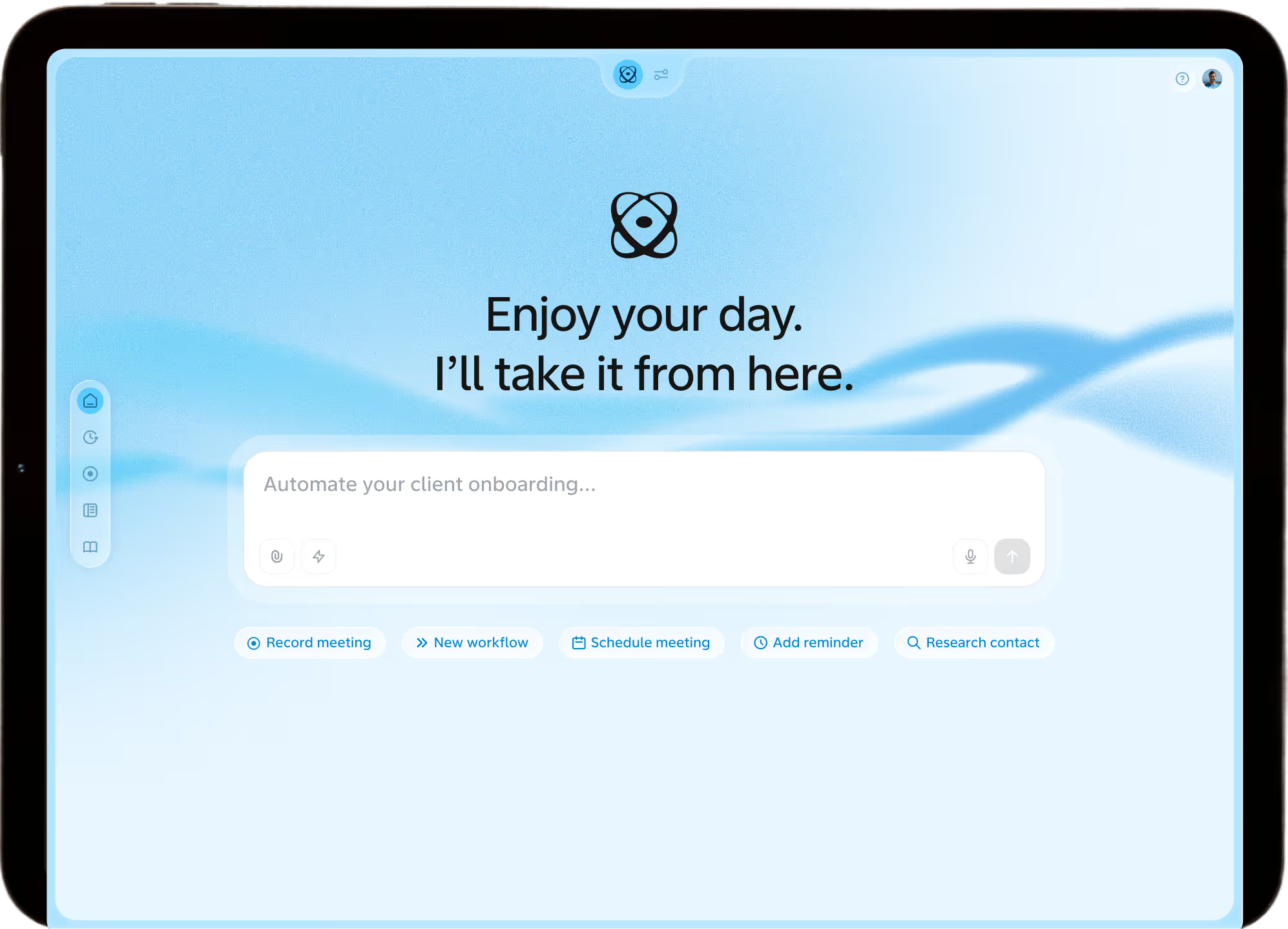
Quin doesn’t stop at recording what was said. It:
- Summarizes the conversation
- Extracts decisions and tasks
- Drafts the follow-up
- Updates your systems automatically
- Keeps context connected from start to finish
If your “assistant” hands you a transcript and walks away, it isn’t really assisting.
It’s just taking notes.
#skills