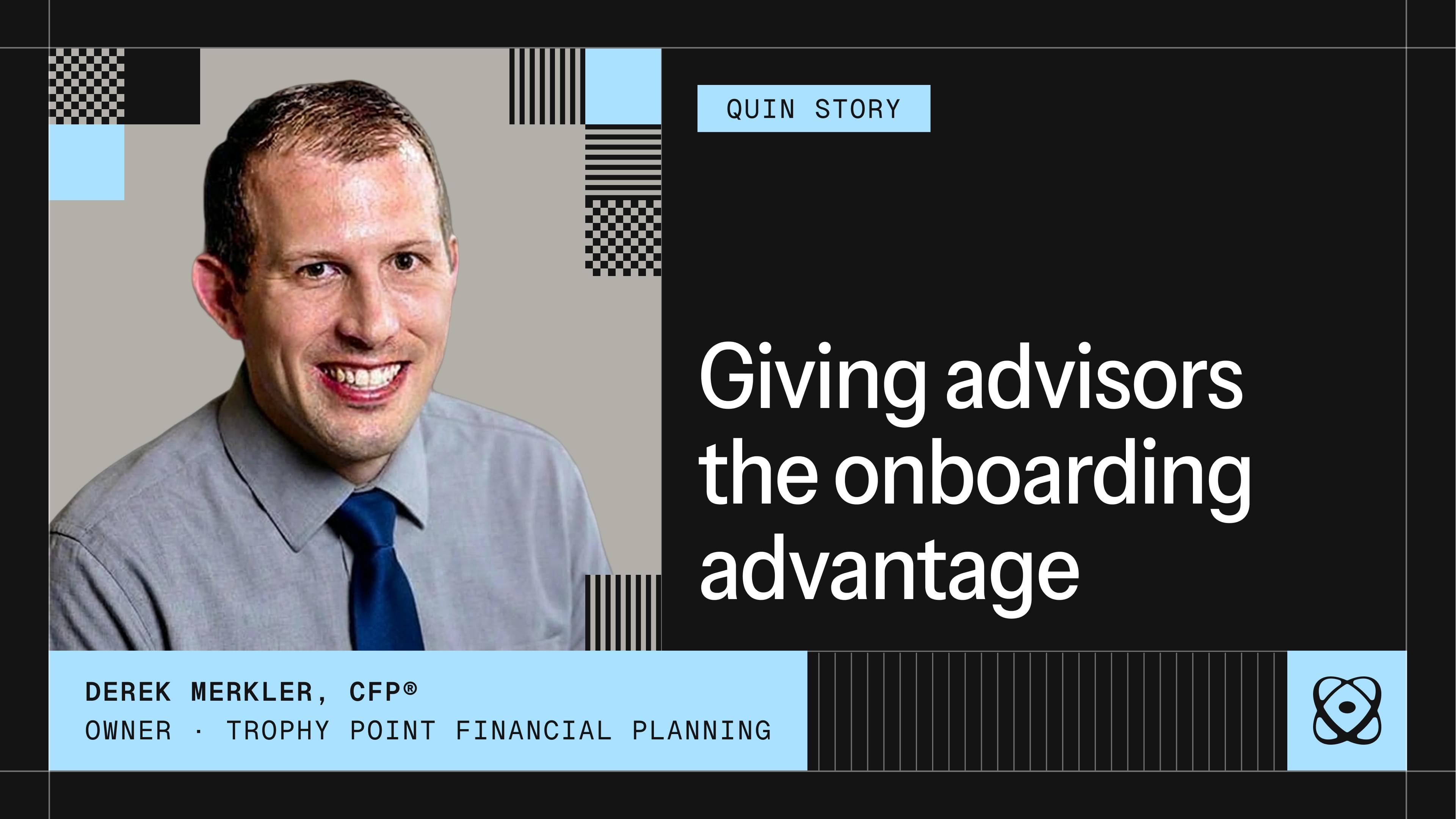
Customer Story: Derek Merkler, Trophy Point Financial Planning
June 15, 2026
About Derek
Derek Merkler runs Trophy Point Financial Planning, a virtual RIA focused on military veterans navigating the transition from service into the corporate world. But that's only part of his practice. He also handles bookkeeping and tax work for horse racing professionals, and has completed more than 550 one-hour planning sessions through Hello Nectarine — a platform that connects clients with fee-only financial planners for short, focused appointments.
Three businesses running simultaneously. A high volume of short-form client meetings. And very little margin for tools that add steps instead of removing them.
The challenge
Running a high-volume virtual practice means a lot of meetings and very little recovery time between them. For Derek, the math was simple: every minute spent on administrative work after a session was a minute he couldn't put toward the next one.
He'd tried standalone AI notetakers like Fathom. They captured what was said. But capturing wasn't the problem. The problem was what happened next — who drafted the follow-up email, who pulled together the action items, who prepped the context for the next call. A notetaker couldn't do that. It just added another folder to manage.
The other challenge was consistency across very different contexts. Nectarine sessions are fast and often involve clients he's meeting for the first time. Trophy Point work is longer-term and relationship-driven. Whatever tool he used had to be useful across both without requiring a different setup for each.
How Derek uses Quin
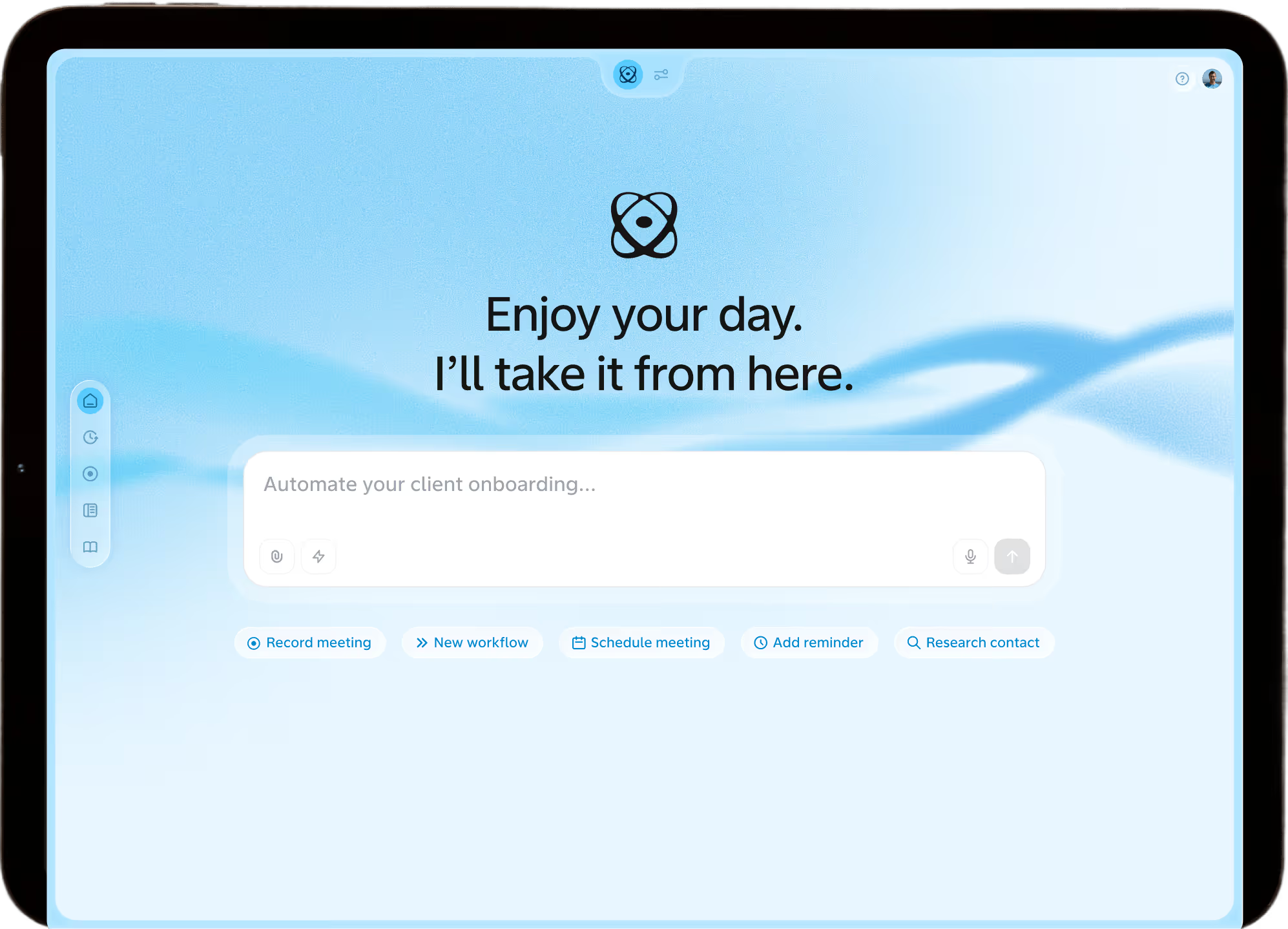
Derek starts every morning the same way: Quin's daily brief before his first meeting. It gives him a quick view of what's ahead and what's still open, so he's not starting the day from scratch or hunting through notes to remember where things stand.
For Nectarine sessions — where client data is often limited — Quin earns its place even under constraints. When there isn't much history to pull from, Quin works with what's there: pulling together relevant context, generating follow-up drafts, and keeping the session from disappearing into a folder of audio files. About 70% of the time, the email drafts Quin produces are good enough to save real time even when Derek edits them. The other 30% still give him a starting point rather than a blank page.
What pulled Derek away from tools like Fathom wasn't a single feature. It was the difference between something that records and something that acts. Quin connected the dots between the meeting and the work that followed, without requiring Derek to manage a separate automation layer on top of it.
His framework for evaluating any new tool: think through the actual value before getting distracted by what's new. Quin passed that test because the use case was clear and the lift was low.
The results
Derek's practice runs leaner because of it. The specific outcomes:
- Every morning starts with a daily brief that surfaces what matters before the first call
- Nectarine sessions — even with limited client data — generate usable notes and follow-up drafts automatically
- Email drafts save time on roughly 70% of meetings, with a starting point ready even when edits are needed
- Standalone notetakers have been replaced by a tool that goes further than capturing what was said
- Across three different business contexts, one tool handles the follow-through consistently
For an advisor running at this volume, the difference isn't dramatic moments. It's the quiet removal of steps that used to eat time between every meeting.
"Keeping it simple is Quin's biggest differentiator."
See what Quin can do for your practice. Try it free for 14 days at heyquin.io.
#skills