Why most AI experiments don't go anywhere
June 29, 2026

I've been wanting to start something like this for a while. I talk to a lot of people running their own practices and businesses, and the questions I hear most often aren't always about Quin. They're about how to think through AI adoption, what's working for firms like theirs, and where this is all going. I wanted to share some thoughts and resources each month to help move us all forward together.
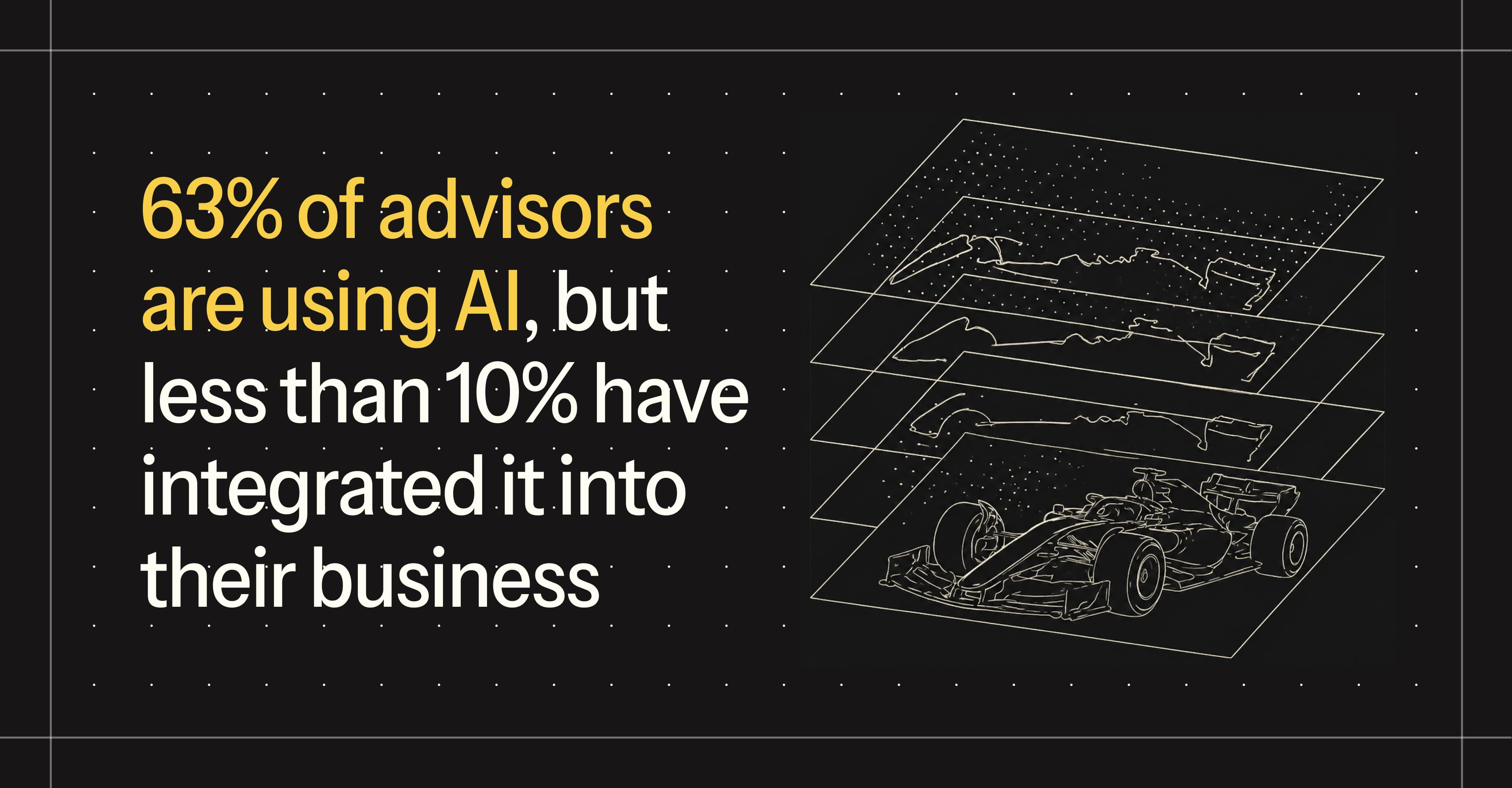
Schwab released a study in January that I've been thinking about since it came out. Sixty-three percent of RIAs are now using AI in some capacity, which is more than double the rate from 2023. But of those advisors, only about one in ten have integrated it into how they run their practice.
That gap doesn't surprise me. I've watched it happen enough times to understand why.
Most people approach AI the same way they approach any new software. They buy a tool, try it on the work that feels most visible — drafting a proposal, pulling together a client summary — and wait to see if it makes a dent. Sometimes it does. Usually the results are mixed enough that nothing really changes. MIT published research last year showing that 95% of generative AI pilots at companies fail to reach production. The reason isn't the technology. It's that most organizations are pointing it at the wrong things.
Here's what the same research found about where AI delivers: back-office automation. Not the front-facing, high-visibility work. The repetitive operational layer underneath it — the follow-ups, the notes, the updates, the same three tasks that show up every single day. That's where the returns are. And it's where most people aren't looking.
For advisors running their own practices, that layer is enormous. Compliance documentation, meeting notes, follow-up emails, CRM updates. It can easily eat a third of the day. Most people have accepted it as just the cost of doing business. The ones who change how their practice runs are the ones who stopped accepting it.
They don't try to automate everything at once. They pick the single most painful, repetitive thing in their week and solve that completely before moving on. One problem, worked all the way through, until it stops requiring their attention. That's it. The results are immediate enough that it changes how they think about everything else.
The companies winning at AI adoption right now aren't the ones with the biggest budgets. They're the ones who got specific about the problem before they picked the tool. The tool is the easy part.
Where to start:
Write down the three most repetitive tasks in your practice this week. Not the most complex, the most repetitive. Pick the one that costs you the most time and treat it like the only thing that matters until it's solved. I'd love to hear what you come up with!
#skills