Give AI the context to work
October 29, 2026
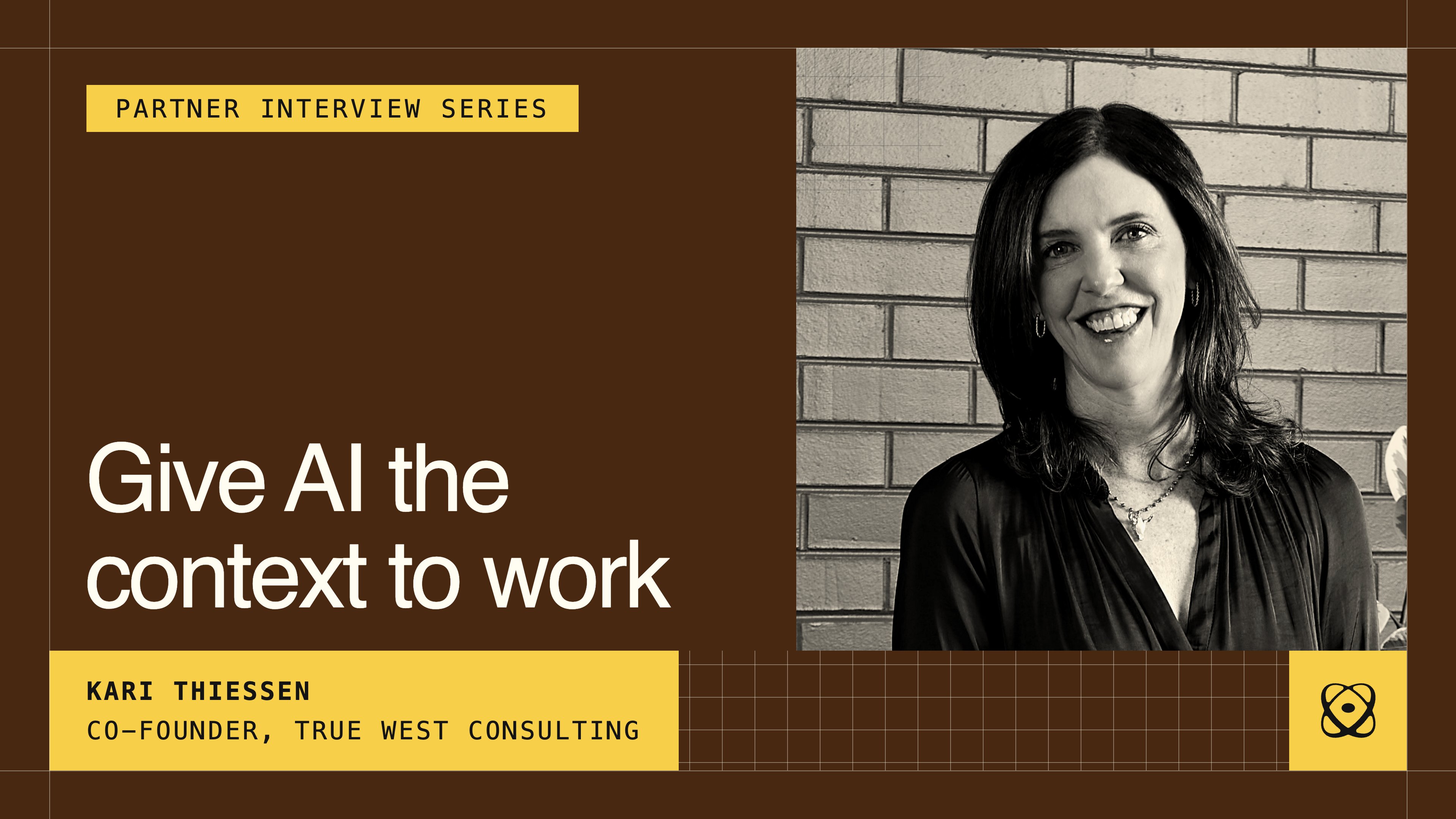
This is the latest installment of our Partner Interview Series, where Gabe sits down with the people who help advisors and sales teams run their business, and gets into where AI fits into that today.
Next up is Kari Thiessen, co-founder of True West Consulting, an integrated back office for independent RIAs covering compliance, legal, IT, and finance. Kari spent over 30 years as a CPA building and scaling tax practices before co-founding True West with Nancy Harry, who brings the regulatory compliance side. Their firm works almost exclusively with SEC-registered investment advisors, and their proprietary platform, Herdware, is built to give AI and automation the context they need to actually work inside a compliance-heavy business.
Tell us about True West. Who do you work with, and what do you cover for them?
Our client base is almost exclusively SEC-registered investment advisors, so really anywhere from $100 million of AUM, our largest client may be up to $3 or 4 billion now of AUM. But our sweet spot is really in the $300 million to $600 million range. That's where firms are at the size where they can pay for outsourced support, they want that expertise, and they don't have a need to necessarily hire a full-time expert internally. A fractional model is really beneficial for them, because they want someone with a level of expertise that's, you know, 20 years, and we have a lot of our consultants bring that high level of expertise, whereas prior to that, you might have someone help internally who's willing and organized and able, but just doesn't have that expert background.
How do advisors usually find you, and what are they asking for?
We definitely started primarily as a compliance firm, so firms usually find us in their registration process, and as we walk them through that, they're asking us for the playbook. What else should I do? Who else should I be working with? What should I consider? As advisors look to break away from larger banks and wire houses, all of those back office functions have really been taken care of for them, and now they need to figure it out themselves. They're looking at being their own business owner, maybe seeking independence because they want more freedom or more take-home out of the money they're managing, and all of a sudden they have to become experts in HR, compliance, cybersecurity. That's a heavy lift. So really our premise is that through our team, and other service providers in our space, we can bring them a more expert-led back office through a reasonable program that's affordable for a startup advisor.
Are you and your team handling everything in-house, or do you bring in outside partners?
It's a combination. True West is really focused on compliance, and now outsourced accounting, from bookkeeper all the way up to a more CFO role. But other players in our system include managed IT and cybersecurity, so we have a partner firm with Go West IT, and we work intentionally with a partner on the marketing side too. Our qualifiers for who we bring to the table are really: do they run a program, or are they just available for one-off questions? We're drawn to service providers who bring a lot of structure, so a new firm doesn't have to figure it out on their own. That's what's most important to us, that they understand the financial services space and our market, and that they have a lot of structure around what they're bringing. Ultimately that lets us operationalize some of it, because we know consistently what the program is going to look like. That's where Herdware comes in — True West is more on the service side, and Herdware is really the operating layer that allows us to implement the workflows.
If there's a playbook for a new firm, what are the top few things you tell them to put in place first?
I'll lead with compliance. Our advice is always: out of the gates, you want the lowest risk radar with the SEC that you can possibly have. So when an advisor is thinking through how they'll spend their dollars to stand up their firm, put the dollars where your highest-risk items are. You want the SEC to think you have a structured program and that you're taking compliance very seriously, so I'd put that high on the list. Then you can decide, once you're a little more comfortable talking about compliance, whether you take on some of those tasks internally.
Second is risk management. Cybersecurity is a huge one right now — Reg S-P was implemented in June, and it requires you to be very serious about how you're treating your client's data. With everybody exploring AI now, it's created a whole new window for potential problems, so I'd focus on cybersecurity right out of the gates too, because it's hard to catch up on that after the fact, once you've hired people who've all brought their own devices. Insurance is a big piece of risk management too, so make sure you're capturing that accurately.
After that it really comes down to the priorities of your firm — are you focused on client growth right out of the gates, or high-quality touchpoints where quantity isn't as big a focus. And then, how do you start to measure those priorities? A lot of firms have a bookkeeper who's good at recording entries, but not necessarily driving the goals of the business and measuring those goals against who you want to be as a firm.
Let's dig into compliance specifically. What are some of the things you put in place — something as simple as archiving emails?
My background is actually not in compliance, that's my business partner's, but I'll tell you the thing she'd say first: if you don't document it, it didn't happen. So make sure you have whatever systems in place to document anything you've done. The rest really comes down to how seriously you take compliance as a firm — is it pervasive throughout all your activities, is it something that's talked about with everyone at the firm so they know how seriously you're taking it. That culture comes out very strong in SEC interviews, and how seriously people are taking it shows.
What's the biggest mistake you see firms make, the kind you have to come in and help sort out?
A lot of times it's people without the right knowledge sitting in the CCO role, who just don't know what they don't know. It really needs to be an expert, and if you don't have that expertise in-house, you should at least have some level of external support from someone who's spending their time day in, day out to guide you on it. Second, it's often just not built into the process of the firm — they might be aware of compliance issues, but they haven't built in the recurring documentation to show what they've been doing. Part of what we've tried to vet out is the right service level, going lighter on some pieces and heavier on others depending on the talent mix a firm has, but also whether you have the right tech stack so the processes are documented and you're not leaving it up to one person, in a role where you might see higher turnover. You want to set up your tech stack so everybody's doing the same process and there's not a lot of oopsies.
What's a system or process you've built that you're especially proud of?
I think of things in two buckets, services and technology. From a service standpoint, True West is very good at a structured program with a lot of tools, and it's a proactive program, which I think is key — not sit back and wait. But we've also found, especially bringing different service providers together, that you have to connect all those dots, and there's no amount of emails that will get you there. You need more process, and that's really where the build-out of Herdware has come from — how can we make these part of the process. Currently the focus has really been on creating the context layer in Herdware.
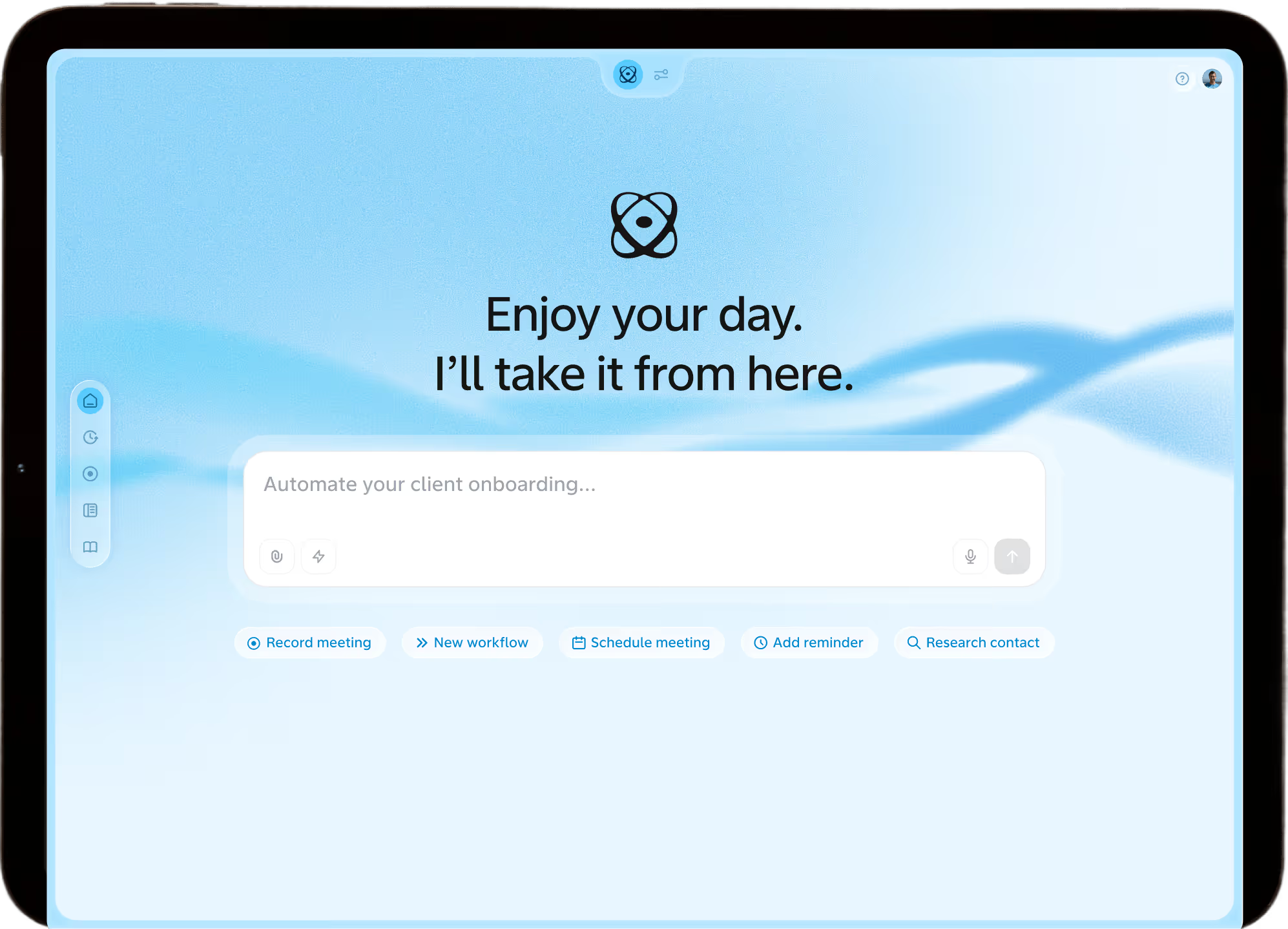
I'm curious about this on the Quin side too — how do you set up Quin to give it context? Because that's the most important thing if you're looking at automation. Any AI project you're going to start, in Claude or otherwise, it's going to ask for context, and that's the key. So we've built Herdware out to house all of a firm's most important documents — your compliance manual, your employee manual, your written information security policy, your incident response plan — so all of that sits there to give AI, or whatever you're using to build your workflows and processes, some context.
I heard an analogy once of treating AI like a brand new employee, someone straight out of school. You're not going to just say, here, go develop the end state. You give a little, then you say, no, this needs to be tweaked, this isn't really who we are or how we do things, and you're teaching the process. That takes a lot of time, and at this point I'm probably most proud of actually taking the time to teach, in order to provide context.
Other than Herdware, what tools do you recommend to the RIAs you work with?
From a compliance standpoint, this is probably our most common one — our whole team is trained as super users on Greenboard. We think it does a really nice job of what I talked about earlier, if you haven't documented it, it didn't happen, so that's really our main documentation trail, and the reporting that comes out of it is SEC-ready and shows really well.
From a marketing standpoint, I can answer this from our firm internally, and what our marketing partner would say too — HubSpot is a really great CRM. I know that's maybe a little controversial in our space because there are RIA-specific CRMs, but I think the automation features are unparalleled. There are also theories out there that the CRM will go away entirely, but we use HubSpot internally too, and it's been a good tool for us. And for accounting, for better or worse, QuickBooks is what most people use, so it's kind of a no-brainer without having to redo an accounting software. There are some fun things out there people are building, but I don't think they're ready yet.
Where do you think AI fits in well today, and where's there room to improve?
I think people are using AI a little wildly at the moment. Everybody thinks they should be using it, but nobody's really taking a structured path on how. I think it fits in very well if you know what you're trying to accomplish — do I just want to tell people I'm using AI so they think I'm forward, or is there a specific business challenge I'm trying to solve, a process within my firm that takes way too long or has too many errors. Can we use AI for that, and can we measure the benefit it provided?
I'd also ask whether you've explored the AI tooling that's already in the technologies you're using. We talk about HubSpot, and HubSpot has some nice AI layers they're putting on there, and I think some people are creating new things when things already exist. AI use needs to come with a lot of structure around it, and even then, laying in an accountability layer around the finances — what savings are you seeing, and is whatever you're exploring, whether it's coding your own app or adding a technology like Quin, actually getting you where you want to be, and are you measuring that? Everybody thinks they should be doing something, they might be doing something, but there's not a lot of process or structure around how and what they're doing, and then ultimately measuring it.
Does the idea of a "tool versus a toy" land for you?
It does. AI has made people so prolific — I can put together six different things in six different ways to give to a client, but if the client doesn't spend any time in it, I didn't create anything of value or process that can actually be implemented. It kind of makes us all look super productive, but productive output that's never used doesn't go anywhere.
I do have a favorite toy I've been playing with, though. A lot of times when we get a first call from someone exploring starting their own firm, we give them a quote for one of our services, and then they ask about insurance, or they're putting together their income statement — what does it look like if I go out on my own, here are my expenses, my startup costs, my ongoing costs. So I've been building a break-even calculator: what assets do you need to move over to get to the same place you were if you'd stayed in your current position, and where's the upside beyond that. And then, a lot of people can assemble the costs, but what if you looked at it as a progression over time — on day one you're not going to have everything in place that your firm will have five years in, so how do you layer on the pieces that make your firm efficient over time, and scale your level of supervision on things like compliance, insurance, and cybersecurity as you bring on assets, instead of trying to have the most heightened version of all of it on day one.
What's the magic number — how much AUM does it take before going independent starts to make sense?
It's probably the number we see when people look to us, so people have often already figured it out, but I think it has to be $100 million of AUM for a standalone wealth management firm to start making sense. Leading up to that, there are a lot of people exploring and growing who may have other things going on, like a heavy insurance business, that let them make the investment in starting the wealth management side sooner than they otherwise would.
Favorite AI tool on the market right now?
All of my fun right now is happening in Claude Code. I don't know that it's the one that helps me run the business the most, but it's the one I spend the most time in lately. Still up in the air whether it's a tool or a toy.
Any productivity hack you use, work or otherwise?
That's an easy one, it's focus time for me. Focusing on a particular thing, whether that's a work project — I don't answer emails all day long. I focus on getting emails done or checking the to-do list at a set time, but if I'm doing all those things woven throughout the day, I can't really focus on a particular goal or outcome, and I lose sight of it. On my development days, when I'm spending time in technology trying to bring a new process or workflow, it's very easy to go down long rabbit holes, so I try to set an endpoint and stop, versus tweaking it forever. Done is better than perfect, because perfect gets you to a place of being really unproductive.
Last one — favorite book, and how do you take your coffee?
My favorite book for many decades now is A Prayer for Owen Meany. It's a story built around a person with a lot of quirks who, at the end, is shown the path to why all of these things happened the way they did, and it comes to light in a really cool way what this person's purpose was.
And I am a coffee drinker: 12-ounce, two-shot, non-fat latte. I don't ever vary it — sometimes hot, sometimes iced. We have an Italian espresso machine at home that's almost always broken, but we love it.
Kari's read on treating AI like a brand-new employee, and what it actually takes to give it context, is worth sitting with whether or not compliance is part of your world. If you want to talk shop with her about building an integrated back office, or see how Herdware works for RIAs, you can find her at True West Consulting or connect with her on LinkedIn.
#skills