Turning meeting action items into Airtable tasks without retyping them
August 6, 2026

A client onboarding call wraps up with three things to do: send a consent form, confirm a beneficiary designation, and schedule a follow-up in two weeks. The advisor writes them on a sticky note, means to enter them into the Airtable base tracking onboarding tasks, and by morning remembers two of the three. The third surfaces a week later when the client asks why nobody followed up.
Teams tracking onboarding or tasks through Airtable instead of a dedicated project tool run into this constantly. The base holds every task with an owner and a due date, but a task gets created right after a conversation, when everyone is least likely to sit down and type it in.
What gets missed when action items move from a call to a task row
- The owner. Who's responsible for a task often doesn't get assigned until it's overdue.
- The due date. A timeframe mentioned in passing, like before month's end, rarely becomes an actual date.
- Which client a task belongs to. A task typed in quickly can land linked to the wrong client on a busy day.
- Every item beyond the first. When three things come up on a call, only the most memorable one tends to make the base.
How Quin handles this in Airtable
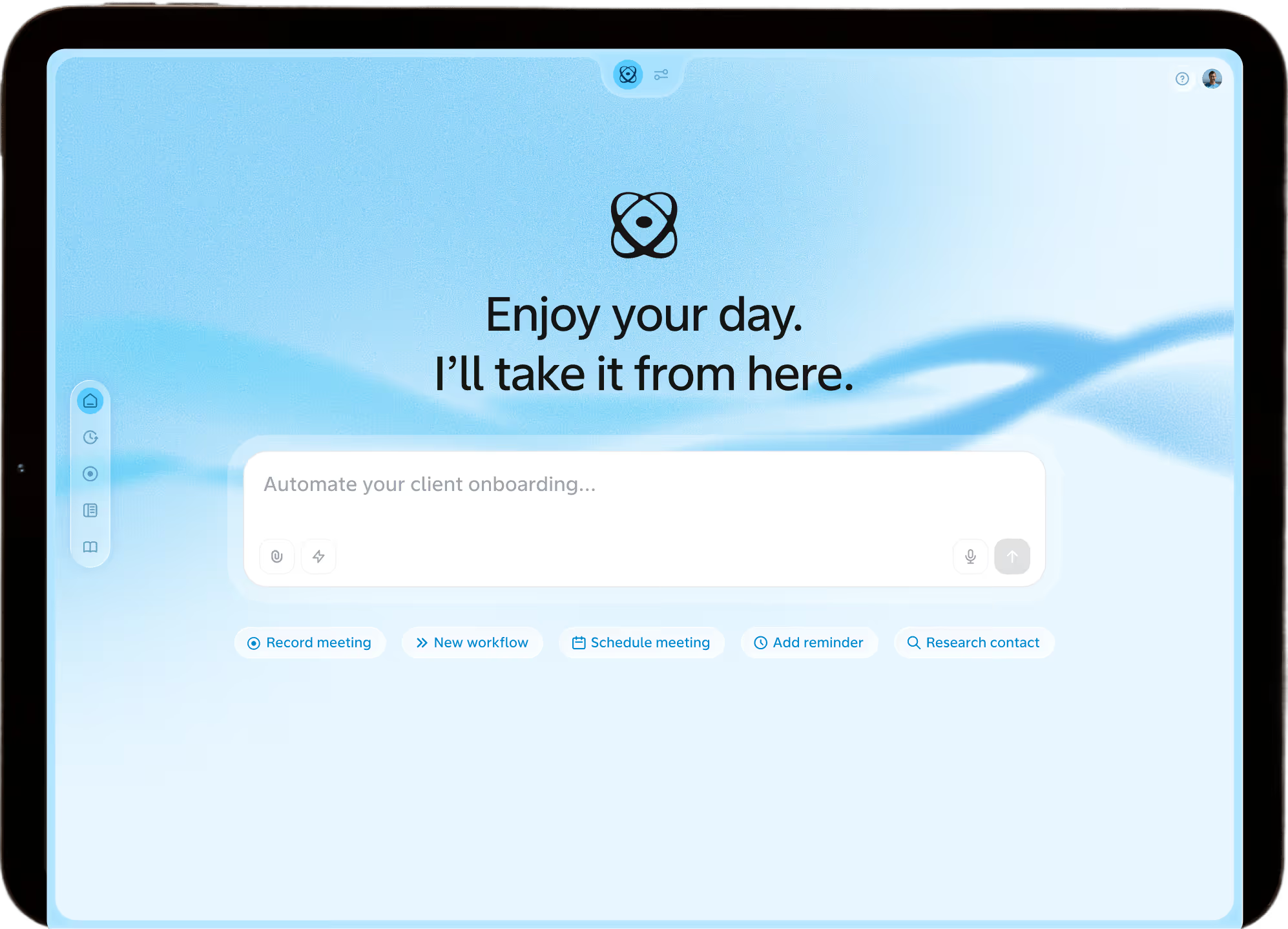
Quin connects to Airtable under Settings, then Integrations, and works with the tables it has access to. Once a call ends and the Notetaker has a transcript, Quin can find the right table, check the field schema so a new task matches the fields already set up, and create a record for each action item, with owner, due date, and linked client filled in from what was said. Quin can also comment on an open record rather than duplicate it, and attach a file if one came up on the call.
Picture an onboarding call where a client needs to loop in their spouse before signing a consent form and asks to push the follow-up to the second week of the month. Quin creates a linked task, sets the owner to whoever handles document collection, and notes the timing in the due date field.
A task base that only catches the easiest item from each call is tracking a guess at the work, not the work. Over a month of calls, the gap between what was promised and what got logged compounds, and a client usually notices the missed step first.
Best practices for an Airtable task base
- Link the tasks table to a clients table. A task without a clear link back to who it's for is easy to misplace.
- Set up a single-select field for the owner. A free-text field invites inconsistent spelling that makes filtering unreliable.
- Tell Quin the specific table when more than one exists. Separate tables for onboarding and service requests need a clear instruction about which one a task belongs in.
- Use the comment field for quick notes. It keeps a record of what changed and when, without rewriting the description.
Setting it up
Connect Airtable under Settings, then Integrations, select the bases Quin should work in, and confirm when prompted. Turn on the Notetaker for calls where action items tend to come up, and tell Quin which table holds tasks the first time you ask it to log one.
#skills