How Zoom and Quin keep notes on a call so you don't have to
May 6, 2026

A sales call runs forty minutes, moves through pricing, objections, and a verbal commitment to follow up by Friday, and somewhere in there you're supposed to be writing all of it down. Most people manage a rough version: a few bullet points typed one-handed while they're still talking, or a longer note reconstructed from memory once the details have already started to blur.
The problem isn't that people don't know what to write down. It's that taking a call and documenting it well are two different jobs, and doing both at once means one of them suffers.
What gets lost when notetaking competes with the conversation
- Specific numbers, like a quoted price, a stated budget, or a timeline a prospect mentioned once.
- The reason behind an objection, not just that they hesitated.
- A commitment with a deadline attached. "I'll get back to you by Friday" is easy to remember during the call and easy to lose an hour later.
- Who said what, when more than one person is on the call and positions differ.
- The natural next step, often stated out loud and then forgotten because no one wrote it down.
How Quin handles it
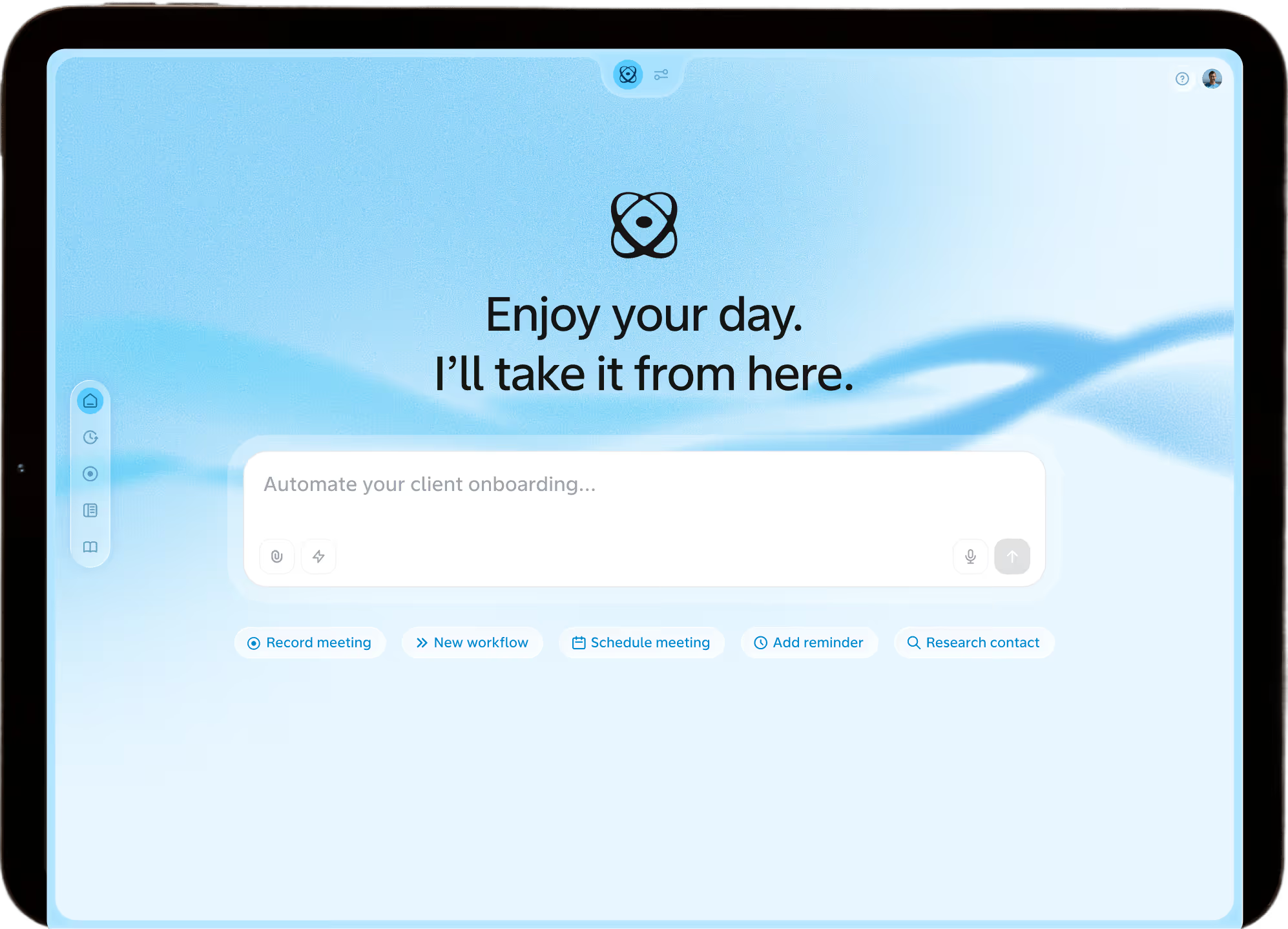
Quin's Notetaker joins a Zoom meeting the moment it appears on your connected calendar, at the scheduled start time, and listens the same way a colleague sitting in would. When the meeting ends, Quin puts together a summary of what was discussed along with the key decisions and action items, and can draft a follow-up email or update a CRM record based on your Guidelines.
That last part works differently depending on where the information is going. A follow-up email lands in your drafts for review, since it's headed to another person. A CRM update doesn't wait on that same step, because it's just keeping your own file current.
Picture a renewal call where a client mentions, almost as an aside, that their contract renews in September and they want to revisit pricing before then. That's easy to let slip past when the rest of the call covered five other topics. Quin catches it the same way it catches everything else, because to the Notetaker, all of it is part of the conversation worth writing down.
Why the detail matters
Skipping proper notes doesn't just cost you time later. It costs the conversation itself, since split attention between listening and writing means a client can tell when you're only half-present. A record of what was said, not just what was decided, is what makes a second conversation with the same person feel like a continuation instead of a restart.
Getting the most out of it
- Set your Guidelines to specify what matters. If dollar figures, dates, or specific objections need to be captured precisely, say so.
- Check the first few recaps closely. It's the fastest way to confirm the level of detail is right before you rely on it.
- Standardize the format across a team, so notes are easy for a colleague to pick up mid-relationship.
- Revisit your Guidelines periodically as your process changes, rather than assuming the initial setup still fits.
Setting it up
Connect Zoom under Settings, then Integrations, and make sure a calendar integration (Google Calendar, Outlook, or Exchange) is also connected so Quin can see which meetings have a Zoom link. From there, turning on the Notetaker is the only other step, and every scheduled Zoom call gets a recap the moment it ends.
#skills