Keeping Your Microsoft Planner Board Current When Priorities Shift Mid-Meeting
August 6, 2026

Two weeks ago, a task went into Microsoft Planner with a due date at the end of the month. Halfway through today's call, the client asks to move everything up by a week, the team agrees, and moves on to the next topic. The task sitting in Planner still says end of month, and by the time anyone notices, other work has already been built around the wrong deadline.
What Tends to Get Missed
- Old due dates just sit there. Once a timeline shifts in conversation, the original Planner task has no way of knowing unless someone manually updates it.
- Deprioritized tasks stay in the same bucket as urgent ones. A task just pushed to next quarter looks identical on the board to one due tomorrow.
- Completed work discussed on the call never gets marked done. Someone mentions a task is finished, the team moves on, and the Planner task stays open.
- New scope gets added in conversation but not to the existing task. The original description no longer reflects what the team actually agreed to.
- Assignee changes announced out loud don't make it into Planner. Someone says "I'll take this one instead," and the task keeps its old owner.
How Quin Handles It
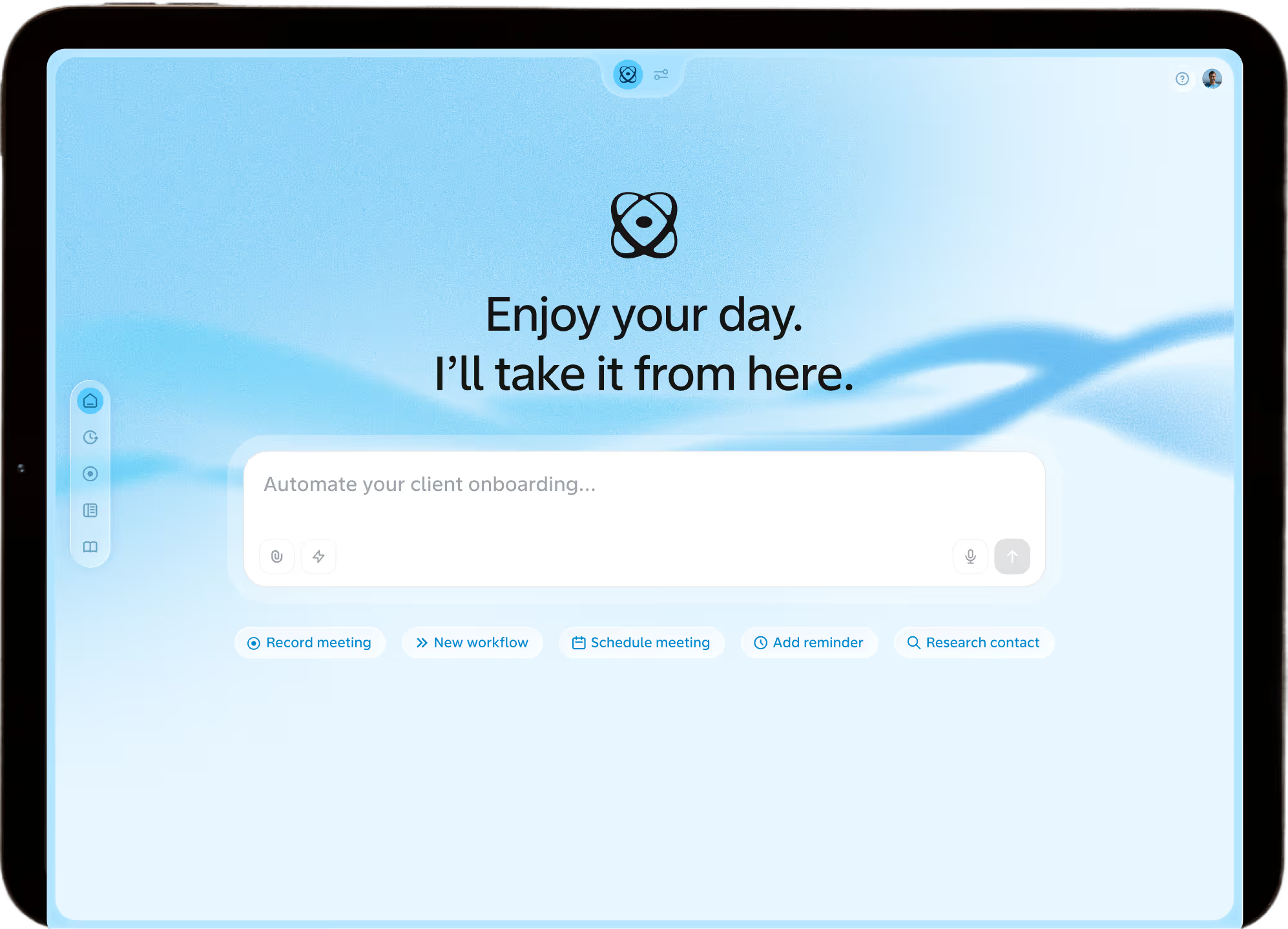
Quin tracks not just new commitments made on a call but changes to ones already on the board. When a timeline shifts or someone takes over an item from a colleague, Quin can find the related task in Microsoft Planner and update it to match what was just agreed, rather than leaving the board to drift out of sync with the conversation.
Picture a quarterly review where a client pushes a launch back three weeks and pulls a smaller item forward to this month. Instead of the board slowly going stale, Quin finds the tasks tied to that project, updates the due dates to match what was just discussed, and marks the item nobody needs anymore as complete. Ten minutes after the call ends, the board matches the conversation instead of the plan from two weeks ago.
The cost of a board that lags behind the conversation is rarely obvious in the moment. It shows up later, when someone plans their week around a due date that changed three meetings ago, or keeps working on something the client already deprioritized. Keeping Planner current isn't just tidiness, it's what keeps everyone working from the same version of reality.
Best Practices
- State changes explicitly rather than implying them. Saying "let's push this to the 15th" gives Quin something concrete to act on.
- Reference the original task or project name when priorities shift. Naming what changed makes it easy to find the right task to update.
- Check the board shortly after high-change meetings. A quick look confirms updates landed the way the conversation intended.
- Mention completed items out loud, even small ones. A task finished between meetings still needs to be marked done somewhere.
Setting It Up
Connect Quin to Microsoft Planner by signing in with your Microsoft account and granting access to your plans. From there, Quin can update due dates, reassign owners, and mark tasks complete based on what gets discussed in later meetings, so the board reflects the most recent conversation rather than the one from weeks ago. You'll find this option under Settings, then Integrations.
#skills