Turning Case Call Commitments Into Tasks MyCase Tracks
August 6, 2026

An attorney tells a client on a call that she will send a revised settlement draft by Friday and file a motion for extension by week's end. She means to do both. Three more calls happen that afternoon, and Friday arrives with the draft still unsent, because the promise never turned into anything a task list would show her.
What Tends to Get Missed
- Verbal commitments that never become tasks. A promise made out loud has no due date in MyCase unless someone creates a task for it.
- Deadlines mentioned in passing. A client says "the hearing is the 14th," a date that matters more than anything else on the call, yet it can get buried instead of turned into a task.
- Tasks that land on the wrong matter, or on nobody. Without a clear owner and matter attached, tasks get created against the wrong case or skipped entirely.
- Document requests that live only in memory. "I'll send you my pay stubs" from a client, or "I'll get you the amended petition" from opposing counsel, need a task and a deadline.
- The follow-up everyone assumes someone else caught. On calls with a paralegal also listening, it is easy to assume someone else wrote down the commitment, and no one did.
How Quin Handles It
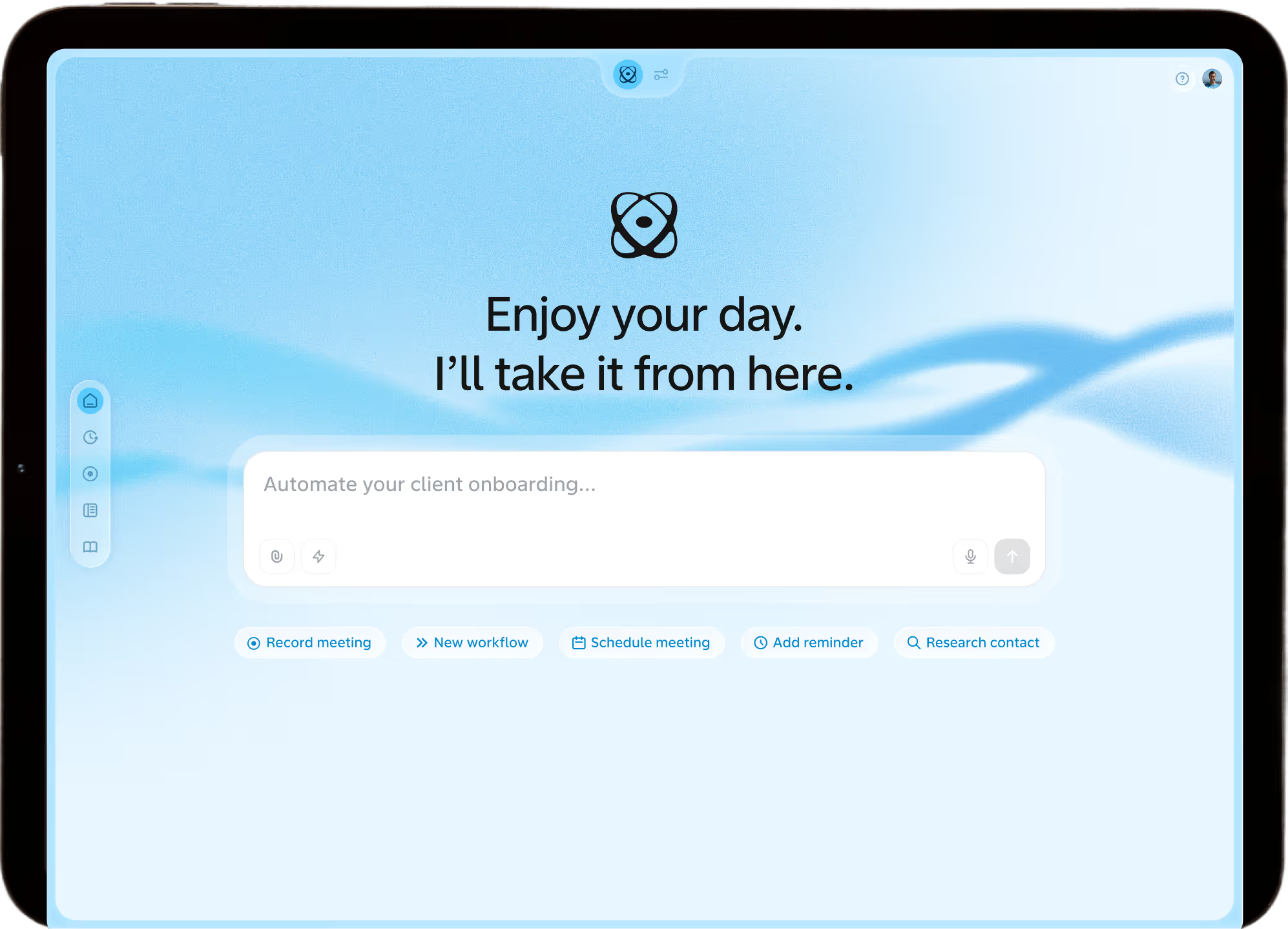
Quin listens for commitments made during a call, on either side of the conversation, and turns them into MyCase tasks tied to the right matter, with a due date attached whenever one was mentioned. A commitment stops being something the attorney has to remember and becomes something the file reflects.
Picture a personal injury attorney on an intake call who tells a new client she needs the emergency room records and the police report before she can evaluate the claim. The client agrees to send both by week's end. Quin creates two tasks on the client's matter, each with a due date pulled from the call, so the attorney is not relying on memory three days later when the records have not shown up and the matter risks stalling.
The same applies to internal commitments. If an attorney tells a client she will file something by a specific date, Quin creates that task, assigned to her, on that matter, with the deadline attached. It shows up where the rest of the team can see it, not only in her head.
Best Practices
- Name dates specifically on the call. "By Friday" is more useful than "soon," and it holds you to a date the client also heard.
- Confirm who owns each commitment. When more than one person is on a call, saying who will handle a follow-up gives Quin a clear owner.
- Check the task list against the matter at day's end. A quick look confirms a promised call back became a task, not just a good intention.
- Treat every deadline mentioned as worth a task. Even a soft deadline is worth logging so nothing slips.
Setting It Up
Connecting Quin to your MyCase account takes a few minutes and does not require any changes to how your firm already works in MyCase. Authenticate the connection, confirm it shows as active, and Quin can begin creating tasks tied to matters as soon as your next call ends. You can find the connection under Settings, then Integrations.
#skills